Pages

Showing posts with label London. Show all posts

Sunday, May 6, 2012

I mark the day, but love her everyday

May 1992: In Holland Park with Mom and Ari
To think back in sadness, in joy, or just to remember… how time flies. It is today 20 years since my mom Vicky left us.
It was a beautiful Spring day in Kensington. May is one of the most beautiful months in London, with flowers blooming all over, trees budding and a promise of summer, that most years forgets to pass by.
Two days before, we had been to Holland Park on the afternoon walk we did most days during the two years Vicky was with me in London, barring a spell in hospital. We had with us Ari, the Sri Lankan lady who for eight years helped take care of mom.
We lived on Campden Hill Road, just five minutes away from Kensington and Chelsea’s largest park. It became a habit after lunch and a short siesta to wrap up, whatever the weather, and go visit the park. It was a routine that broke up our long, solitary days and one we looked forward to.
Holland Park's Kyoto Garden
Holland Park is the Royal Borough of Kensington and Chelsea’s largest park with 22.5 hectares of flower gardens, children’s play facilities, sports areas, a cafeteria, and large stretches of woodland buzzing with wildlife. Contained within the park is the beautiful Kyoto Garden, a Japanese garden donated by the Kyoto Chamber of Commerce in 1991.
The park is one of central London’s most peaceful spots and so it provided us with lots of joy. It had semi-wild woodland, garden areas, a famous Orangery and a restaurant by the same name, a giant chess set, a cricket pitch, tennis courts and one of London’s best equipped children's playgrounds, as well as squirrels and peacocks.
After crossing alleys lined with chestnut trees, we had several stops to make before heading to the pond area where we would site and chat with the regulars.
First was the Kyoto Garden to hear the gong from the natural fountain.

Is this Hanna?
Next we would go feed the squirrels. They are very tame and would come up to our hands for their peanuts and make Vicky giggle. They are tagged and we recognized them by these bands. Vicky named one Hanna (John), and would look for him every day.
A Holland Park peacock
We’d then go look for the peacocks and wonder if they would grace us with their spectacular fanned tails. We would then check on the formal gardens to see what flowers had bloomed, run our hands on the lavender beds to keep the aroma and then pass to say hello to a lady statue, next to the Orangery. We never knew whom she was, but she was to play an important role…
With an ice cream or a cup of tea in hand, depending on the weather, we then sat by the pond for an hour or so.
Our corner of transuility
We were easily recognizable, Vicky in her wheelchair with Ari and myself pushing it in turns. We were part of a small community of regulars who spent a couple of hours in the tranquility of the beautiful Holland Park grounds.
But rewinding the clock 20 years… When got back from Holland Park on the afternoon of May 4, 1992, Vicky wanted to have a little rest. She stretched out on the living room sofa. She seemed more tired than usual, and when Ari and I tried to sit her up a couple of hours later, it was too difficult. She had become very heavy and we had to wait for a friend to pass by and help get her into bed. I could feel the kind of sleep she fell into was much deeper than usual. It was time to call the family.
May 5, was another sunny London Spring day. The sun was out, the birds were singing, cars were passing, the World Snooker Championship continued on TV… but Vicky could not get up, there was no walk to Holland Park, just a bedside vigil, where minutes feel like hours and hours like days.
A final resting place
Although mom was terminally sick for eight years -- first surviving an aneurysm, then severe osteoporosis, living with Hepatitis C and a broken hip for good measure -- you are never prepared to say goodbye to a loved one. So it was while sitting next to her on the bed that I thought it would be okay, yet again, and we would be racing back to the park in a couple of days. But it proved wishful thinking…
As the hours passed, she sank into a deeper sleep. And then, the most horrific sound of all – the death rattle – began at night. It is a sound you never want to hear. And in those last hours, a lifetime goes through your mind played in slow motion.
The final breath is so peaceful. You can feel it going through your soul and lifting in the air.
On that May 6 morning, life would never be the same again. “What will I do now?” I wondered then in tears.
The following weeks are a blur. I know we eventually made our way back to Holland Park to scatter Vicky’s ashes.
The statue of the lady gone, my sister Asma takes her place
Being so far from home and her beloved Beirut, it seemed appropriate for all the peace and joy the park had brought us. And where better to spread out the ashes than in the flowerbeds, with the birds, squirrels and peacocks, next to the statue of the lady (which sadly was removed a few years later)?
And life goes on…
If any of my London readers happen to be in Holland Park today, say hi to mom and maybe a little prayer.


Related posts:
Dearest Mom… March 21, 2011

Tuesday, February 8, 2011

Gardenias, roses and LTC

I am furious! Four years of nurturing my two gardenia trees have vanished into thin air. After caring for them, talking to them, caressing them, watching them grow and enjoying their blooms, the “gardener” chose to flood them – in my absence -- with blue fertilizing pellets that burned them.

My gardenias: From this...
... to this
The two gardenia shrubs were next to my front door. It was a pleasure to come back to their sweet scent in the evening and leave it behind first thing in the morning. They used to flower from early January right through May, when the desert heat finally starts pinching.

It is two months now since I tried reviving them, but it’s a losing battle so far. While I keep it up, I switched my attention to roses for the moment.

In our garden in Baghdad
Gardening is a big part of my life. It is a pleasure I take first from my grandmother, Teta Asma (see Love is blind… 28 January 2010) and from my mum, Vicky.

I only knew Teta Asma’s balcony in Beirut, but it was almost a garden. Her trademark was growing fuchsias – of all varieties and colors. She passed on the love for them to Vicky and I. I haven’t found any fuchsia plants in Dubai yet, but I’m always on the lookout. The fun in Teta’s balcony/garden was her pots. Not fancy ones, but anything available in the house or kitchen, especially big steel cans in which olives, oil, cheese and other mouneh (provisions) were stored in the old days.

Mum arranging lillies from our garden in La Marsa
I remember our garden in Baghdad, but especially loved the one in Tunis. We first lived in Sidi Bou Said and then moved to La Marsa, where the garden was huge. We had orange and lemon trees that yielded so much fruit that we filled a basket in front of the main gate for passersby to help themselves. There was also a vegetable patch and our strawberries were delicious.

Dusk watering was my favorite task. It was rewarding to watch nature come back to life after a sweltering day and see my efforts rewarded. In fact, there were so many flowers, that we were often late for school in the morning while waiting for my dad, Esa, to choose a flower for his boutonnière.

It was difficult to live in a flat when we moved back to Beirut in 1973. But Vicky quickly transformed our large balcony into a quasi-garden. When we left in 1990, all the neighbors were scrambling to get their share of that oasis.

When I arrived in London in 1985 and started looking for a flat, I realized how difficult it will be to find one with either a garden or a balcony. It was bingo, when I came across a flat on the fifth floor, with a balcony overlooking not only the Chelsea Physic Garden, but the Thames and Battersea Park as well.

It looked so beautiful after a few years, with fuchsias, petunias, roses, lavender, tomatoes, basil, mint, chives, bizzy lizzies… that I thought of opening it to the public – all two meters of it -- but didn’t think my landlady would approve!

My balcony, top right, overlooking the Physic Garden (via commons.wikimedia.org)
The Chelsea Physic Garden on the Royal Hospital Road is London’s oldest botanical garden and a unique living museum. It was founded by the Worshipful Society of Apothecaries of London in 1673 for its apprentices to study the medicinal qualities of plants. Throughout the 1700s it was one of the most important centers of botany and plant exchange in the world. The location was chosen as the proximity to the Thames created a warmer microclimate allowing the survival of many nonnative plants -- such as the largest outdoor fruiting olive tree in Britain (which I could see from my windows) - - and more importantly, to allow plants to survive harsh British winters.

I often thought of becoming a gardener and taking Physic Garden degree had it not been for the high cost of the two-year course.

Now, where was I? Yes, roses…

My new rose bush...
... and it's first flower
While going around the garden where I live in Dubai with my landlord last week, I noticed it featured some new roses. When he encouraged me to smell the flower, I was dazzled. I have never come across a rose with such an exquisite sweet, fruity fragrance. He promised to get me one to make up for the gardenia saga. Unfortunately, we don’t know what variety they are or their name, but never mind.

The last time I had roses in London, it was the Sharifa Asma Rose variety, hybridized and introduced by David Austin in 1989. My brother, Emile, surprised me with a bush in memory of Teta Asma, and because of our sister is also called Asma. It was a beautiful rosebush, a bit like a peony, with a musky, sweet and rosy scent that reminded of rosewater and essential oils.

I got my new rose last week and the first flower that bloomed is encouraging, although it is small. I look forward to seeing it grow. The gardener has strict orders to stay away from the rose pot.(More pictures here.)

While the battle goes on to revive the gardenias, they will share the love and tender care (LTC) with the roses.


Enhanced by Zemanta

Wednesday, December 22, 2010

Feathered housemates


Although “location, location, location” is the magic formula and number one rule in real estate, an extra is always welcome.

The garden, pool and aviaries, on top of the location, immediately had me sold on the home I now rent in Dubai. Having a friendly landlord and his convivial family is the icing on the cake.

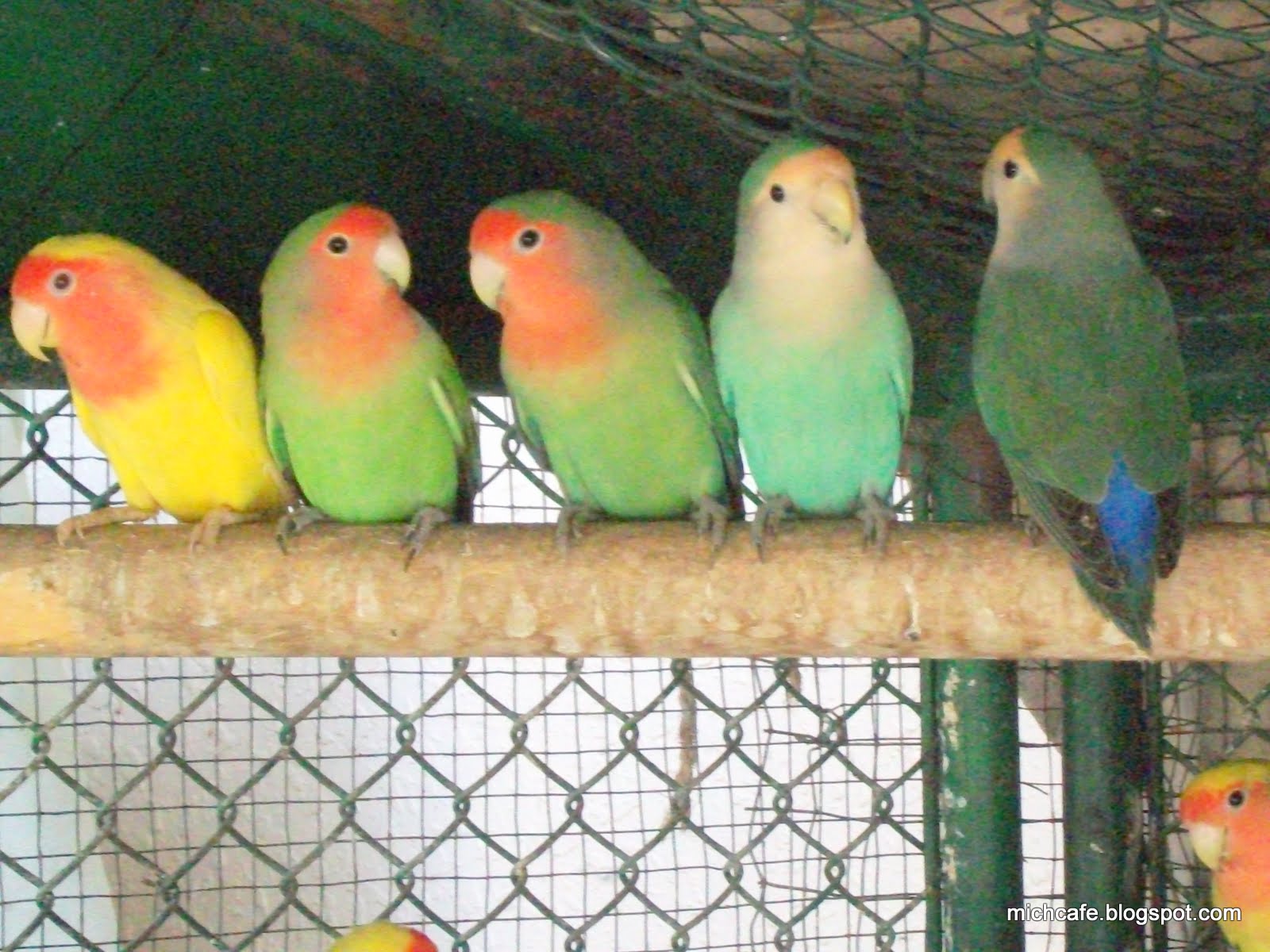
When I arrived from London four years ago, I was already missing my pet budgie and the sight of three aviaries in the garden of my new Dubai home was a boon.

I have often written that it’s hard to wake up on the wrong side of the bed when the first you hear is the chirping and tweeting of all kinds of birds. For we now have two aviaries jam-packed with lovebirds and a third housing white doves.

Breeding lovebirds, and now white doves, is my landlord’s hobby. While wondering around the garden with him earlier this week, Shehab Habib said he could not remember when his love for birds started. “Maybe it is through one of my uncles, who breeds them,” he said. He chose lovebirds because he admires their colors, enjoys their chirping and singing as well as their joie de vivre.


Mr. Habib started out with eight lovebirds and now has more than 60. The colors were random at first, until he paired those he appreciated most and were favored by buyers, like the Red-Faced lovebird. He says these are the favorites, followed by the green and yellow and bright yellow variety. Lovebirds are so named because when kept in pairs they will constantly groom one another and sit as close together as possible when sleeping or resting. They are playful, inquisitive and an ideal pet, especially when hand-raised.

Lovebirds, or Agapornis, were a largely unheard of species outside Africa until Europeans wrote about these strange brightly colored birds they had seen while on that continent. The first Lovebird to be described in detail was the Red-Face in early 1600. It was also the first to be imported into Europe during the 19th century since it was found more commonly in the wild than any of the other species. It is hard to tell the male from the female lovebird, and Mr. Habib says the pairing is often haphazard and can result in some astounding colors. But he now has an eye for telling them apart.


Our garden lovebirds are chirpy, especially at dawn and at dusk. They weren’t too scared when I went into their homes to take pictures and settled after a while and ignored me. The nesting boxes had baby birds, but I didn’t want to disturb them.

It seems they are sought-after Christmas presents and I hope those who offer them realize that a pet is for life and not just for Christmas week. Mr. Habib says the cheapest place to buy them is in Sharjah, where a pair is sold for about AED 250 ($ 68). On Dubai’s Jumeirah Beach Road, however, a pair can leave you AED 800 ($ 217.80) out-of-pocket.


The white doves are a more recent addition to the garden. Mr. Habib secured them from his uncle. We now have three pairs and two young ones, called “squabs.” Doves lay two eggs that hatch after about 14 days. Both sexes incubate them and have a nutritious milk to feed to the young who stay in the nest for nearly four weeks.

I am now monitoring their growth and looking forward to watching them fly around the aviary. And the family grows with two other squabs on the way. Although these doves are a special meaty variety coveted as a delicacy by restaurants and individuals, none of ours have been sold for that purpose so far.


The white dove, with an olive branch in its beak, is a symbol of peace and love. Genesis recounts how Noah let a white dove out from the Ark to see if there was any land left after the Flood. The dove came back with an olive branch. When he released it seven days later, the dove did not return, proving to Noah that it had nested. Soon after, Noah and the rest of the animals touched land.

Both the lovebirds and the white doves tolerate the Dubai harsh and long summers and are thriving in Mr. Habib’s care as you can see from the pictures here.

Joumana and Dragi
[This post is dedicated to Dragi, a parrot I befriended on Twitter and who left us earlier this month. I know how hard it is for his owner, Joumana Medlej (@cedarseed), from my own experience with losing my budgie. Joumana, a comic author, illustrator, writer, photographer, globetrotter, martial artist and graphic designer, was chronicling her days with Dragi and I look forward to the "Dragi and Me" comic book. You can meet Dragi at “The Wild Garden” here and view Joumana’s website portfolio here.]