Pages

Showing posts with label children. Show all posts

Tuesday, June 24, 2014

Syria: Children in battle

“At first I was so scared… then I got used to it,” said Ayman, who began fighting with an FSA brigade in Salqin when he was 15 years old.
“Maybe we’ll live, and maybe we’ll die,” said Omar, who began fighting at age 14 with Jabhat al-Nusra.
Non-state armed groups in Syria have used children as young as 15 to fight in battles, sometimes recruiting them under the guise of offering education, Human Rights Watch said in a report released on Monday. The groups have used children as young as 14 in support roles. Extremist Islamist groups including the Islamic State of Iraq and Sham (ISIS) have specifically recruited children through free schooling campaigns that include weapons training, and have given them dangerous tasks, including suicide bombing missions.

The 31-page report “‘Maybe We Live and Maybe We Die’: Recruitment and Use of Children by Armed Groups in Syria,” documents the experiences of 25 children and former child soldiers in Syria’s armed conflict. Human Rights Watch interviewed children who fought with the Free Syrian Army, the Islamic Front coalition, and the extremist groups ISIS and Jabhat al-Nusra, an Al-Qaeda affiliate, as well as the military and police forces in Kurdish-controlled areas. The report does not, for logistical and security reasons, cover all armed groups that allegedly have used children in Syria, in particular pro-government militias. Using children in armed conflict violates international law.

“Syrian armed groups shouldn’t prey on vulnerable children -- who have seen their relatives killed, schools shelled, and communities destroyed -- by enlisting them in their forces,” said Priyanka Motaparthy, Middle East children’s rights researcher at Human Rights Watch and author of the report. “The horrors of Syria’s armed conflict are only made worse by throwing children into the front lines.” 

The number of children fighting with armed groups in Syria is not known. By June 2014, the Violations Documenting Center, a Syrian monitoring group, had documented 194 deaths of “non-civilian” male children in Syria since September 2011.

The children Human Rights Watch interviewed had fought in battles, acted as snipers, manned checkpoints, spied on hostile forces, treated the wounded on battlefields, and ferried ammunition and other supplies to front lines while fighting raged. They said they joined non-state armed groups for various reasons. Many followed their relatives or friends, while others lived in battle zones without schooling or other options. Some had participated in public protests that motivated them to do more, or had personally suffered at the hands of the government. While all those interviewed were boys, the Kurdish Democratic Union Party (PYD) police force and armed wing, the People’s Protection Units, enlisted girls to guard checkpoints and conduct armed patrols in Kurdish-controlled areas.
Boys have joined armed opposition groups for various reasons. Many simply followed their relatives or friends. Others lived in battle zones without open schools, participated in public protests, or had personally suffered at the hands of the government. Islamist groups such as ISIS have more aggressively targeted children for recruitment, providing free lectures and schooling that included weapons and other military training.
“At first I was so scared…then I got used to it,” said Ayman, who began fighting with an FSA brigade in Salqin when he was 15 years old.
Others interviewed echoed his words. Few had plans or real hopes for their future beyond the next battle. “Maybe we’ll live, and maybe we’ll die,” said Omar, who began fighting at age 14 with Jabhat al-Nusra.
International humanitarian law (the laws of war) and international human rights law ban government forces and non-state armed groups from recruiting and using children as fighters and in other support roles. The Optional Protocol to the Convention on the Rights of the Child, which Syria ratified in 2003, bans non-state armies from recruiting or using children under age 18 in direct hostilities. Conscripting or enlisting children under 15, including for support roles, is a war crime under the Rome Statute of the International Criminal Court.
Several of the children interviewed said they fought with two or three different armed groups fighting Syrian government forces. Some -- like Amr who said he received US$100 a month -- received monthly salaries of up to $135, while others said they participated without pay. Many attended training camps where they learned military tactics and had weapons training.
Children who wished to leave armed groups and resume a civilian life told Human Rights Watch they had few options to do so. Saleh, 17, said he fought with the Free Syrian Army at 15 after he was detained and tortured by government security forces. He later joined Ahrar al-Sham, then left to join the Jund al-Aqsa, an independent Islamist armed group. “I thought of leaving [the fighting] a lot,” he said. “I lost my studies, I lost my future, I lost everything. I looked for work, but there’s no work. This is the most difficult period for me.”
Some armed groups told Human Rights Watch that they prohibit child recruitment, or have taken preliminary steps to end the practice. In March 2014, the National Coalition of Syrian Revolutionary and Opposition Forces, a coalition of opposition groups supported by the Free Syrian Army, announced that it had implemented “new training for Free Syrian Army members in International Humanitarian Law to eliminate the recruitment and participation of children in armed conflict.”
COMMITMENTS
If they have not already done so, armed groups operating in Syria should publicly commit to end recruitment and use of children under age 18, and should demobilize all fighters or others under 18 currently in their ranks, Human Rights Watch said in the report.
Those recruited under age 18 but now no longer children should be free to leave opposition forces. Armed groups should also work with international agencies specialized in child protection to rehabilitate and reintegrate these children into civilian life. Finally, they should ensure that all officers under their command understand the ban on recruiting or seeking assistance from children, and establish age-verification procedures they must follow to enforce it. Officers responsible for recruitment who continue to enlist children should be appropriately disciplined.
To address the practice of children joining armed groups in Syria, UN bodies should seek public commitments from armed groups not to recruit or enlist children under age 18 and use age-verification procedures to ensure that children do not join. The UN Security Council should refer the situation in Syria to the International Criminal Court to allow prosecution of war crimes, including the conscripting or enlisting of children under 15 into armed forces or non-state armed groups or their active participation in hostilities.
Governments providing aid to armed groups in Syria should review these groups’ policies on child recruitment, and should suspend all military sales and assistance, including technical training and services, to all forces credibly implicated in the widespread or systematic commission of serious abuses, including the use of child soldiers, until they stop committing these crimes and take appropriate disciplinary action against perpetrators. They should also restrict residents of their countries from providing military support to these groups.
Finally, humanitarian agencies operating in Syria or assisting refugees in neighboring countries should support efforts to provide secondary education opportunities for children, and address the particular needs and vulnerabilities of boys aged 13 to 18 in their child protection programming.

Sunday, December 22, 2013

Feast of Syria war kids’ stories


Christmas is a few days or hours away, and my thoughts somehow keep going back to the more than 1.1 million Syrian children refugees.
The magic of Christmas lives on in children. But so many will not have the opportunity to enjoy it and will miss out on its boots, branded toys, traditional games, decorations, cards, and more.
That is why I was deeply touched when I came across this piece, posted on December 17, by blogger Maysaloon on the experience with Syrian refugee children and their stories in Reyhanli, a town and district of Hatay Province, on the Mediterranean coast of Turkey, a stone’s throw away from Syria.
* * * * *
On Sunday I sat down in Hatay airport feeling tired. The weather conditions were abysmal and I wasn't looking forward to the next forty eight hours of travel before I got home. Then I rummaged through my satchel and found a folded piece of paper. A little girl called Rime had given it to me two days earlier, and I had put it in my pocket without reading it. I figured I had the time now, so I took it out and unfolded it carefully.
As I read her neat handwriting, with hearts and little flowers drawn upon it, I felt myself choking up and my face lit up with a bright smile. It was a story about a bee and a sheep and a turtle and how they all decide to go together for a picnic and play beneath a tree in a magical castle and when they were all done they got back home and went to sleep.
This last week I was volunteering with the Karam Foundation to help cheer up Syrian children at the Salam school in Reyhanli. I was running a journal writing workshop and also helping out with a storytelling workshop, and one of the things that I was constantly telling the children was that stories needed a "secret" password before being told, otherwise they wouldn't be nice, like tea that had gone cold.
The children would remind me when I pretended to forget, and they would chant out the words "Kan ya Ma Kan Fi Qadeem al Zaman" -- "It was or it was not, in a time long ago" before each recital.
At the end of every story we would end with the cutesy "Hilweh wala fatfouteh?" (Is it nice or is it not?) phrase. I must have told a thousand stories before the week was through, and the children were mesmerized by each one. It was as if something magical happened when a story was being told, and we were all engaged in something old and familiar.
I told stories of a magical giant who helped a little girl find her way back home, of a hunter who rescued a boy lost in the woods, and of how the boy helped his father reclaim his land from a thief.
There were stories of turtles travelling to the pyramids and of a little beetle that helped people to finally drink from a magical fountain of happiness that was protected by a mean caretaker.
In the diary writing workshops I asked the children to write twenty lines about the worst day in their lives, and another twenty about the best day. Anybody who reached twenty lines for the best day of their lives got to pick a special sticker to keep in their notebooks. It was just a sticker, but when they were finally given the opportunity to pick one their eyes would light up in glee and they wouldn't know which one to pick. They would take what seemed like ages to choose which one they wanted. I don't know how it happened, or when exactly, but I fell in love with each of those children and was able to tell their personalities apart even in the short time we had available.

One seven-year-old girl drew me a pretty picture with patterns and a large heart. Written in the heart were the words, "Baba". The cynic in me would have smirked, but after reading what some of these children had written about their lives, or what they had told me over the past days, I almost cried. How could I possibly be a Baba figure to anybody? But for those short days I was.
I remember one boy who looked just like a writer, whatever that may look like. I saw him pick up his pen and stare at the page as I asked him to write about the worst day of his life. He paused as if to think about it, sighed as if he had pulled it up from deep within himself, and then began writing. He then wrote on and on and on. He also wrote over thirty lines for the happiest day of his life, and so did many other boys and girls.
They all whistled when they heard me ask for a mammoth twenty lines, but when they started, many of them went far beyond that. In fact, I had trouble stopping them writing. Some of them even let me read the entries, on condition that I don't read it aloud to the other children. It was a privilege for me to have looked into their memories. They were all good kids, beautiful kids.
One girl who wore a red scarf and matching woolly cap was a know it all and quickly became my very own teacher's pet. She fussed and tsk'ed when she saw me write the date on the board. She said "Sir, I can tell you don't know Arabic. That's not the way we write the date on the board." Then she got up and wrote it on the whiteboard in her very best handwriting. I asked her what her name was and she told me. I told her that that was the name of somebody very dear to me, to which she straightened up in her seat and replied almost instantly with an answer that was the very best that Syrian polite society had to offer. It was all I could do not to burst out in laughter in front of the class.
The next day I saw her running around madly with paint on her cheeks and fingers as she helped the artists in our groups paint the new mural on the school wall, full of life and mischief.
There were countless children throughout the week. There was the young boy Hassan who wanted me to play with his new ball in the playground on our last day, there was young Aisha who let me sit next to her in a class whilst one of my colleagues taught them about photography. She told me all about her family and of how her father was a vet and of how she loves all kinds of animals except cats. She told me she wasn't afraid when the volunteer dentists pulled out one of her teeth and that she had been brave, and I believe her. In spite of everything they had been through, these children had found a way to remain cheery, alive and curious about life.
I do love them all dearly. But there were also moments of sadness. Like when I met an eleven-year-old boy who didn't know how to read. I have never met someone who can't read, and I stood there stunned for a moment as my mind raced through ways that I could help him in the one hour I was spending in his class. There were none, so I asked him to draw the best and worst days of his life. He drew pictures of the planes that Assad had sent to bomb his village.
One boy told me how he had locked himself in his room for three days when his cousin was killed as he fought for the Free Syrian Army -- I asked him to write about that.
Another boy told me his father had been killed, and that that day was the saddest day in his life -- he went on to write about that too.
One girl spoke of how her brother had been captured by the regime, and of what they had done to him.
Everybody had a story to tell me.
And in spite of that they all retained the greatest of warmth and hospitality. They constantly offered me sweets and biscuits after our classes.
For one boy, the best day in his life was when his friends came to visit him on the Eid and his mother had cooked his favorite dishes. They then had tea and he was given 100 liras to go and buy chocolates and biscuits from his uncle's corner shop. I told him to write that down too and he got one of the stickers for his efforts.
So much more was seen and done in this week, of which I will be writing, but as I sat there in that busy airport with the world walking by, I thought of a pretty little girl with a pink woolly cap who had gone home after my storytelling workshop to write me a story in her best handwriting albeit with spelling and grammar mistakes.
She even remembered the magic words and when I reached the end of the story she asked me "Hilwe wala fatfouteh?"
I paused for a moment and mouthed my reply back to her silently.

Sunday, December 15, 2013

Does Santa exist for Syria’s children?

Despite the freezing cold, children will be children... (via telegraph.co.uk)
Most people, especially children, hope for a White Christmas. It is certainly not the wish of over 1.1 million Syrian children, now scattered across their own country or taking refuge in neighboring Lebanon, Jordan, Turkey and Iraq.
With Christmas just over a week away, most families are now filling bags of gifts for their children, decorating their homes, putting up Christmas trees and stocking up on food for the festive season.
In the Middle East, and especially in Syria and Palestine, children will not even know it’s that time of year.
In Syria, in particular, where over half of all 2.3 million refugees are children, will this shameful milestone of conflict deliver more than headlines?
Nowhere else to sleep...
Why is it that the human heart and conscience remains blank and cold in the face of the tragedy of these kids? Why are there no more initiatives such "Do They Know It's Christmas?" in 1984 and Live Aid in 1985?
The UN refugee agency UNHCR is stepping up measures to protect the hundreds of thousands of Syrian refugees in Lebanon, including 120,000 living in flimsy tents, as they face the onslaught of a massive winter storm in the region dubbed “Alexa.”
"For the hundreds of thousands of refugees in Lebanon, as well as those in neighboring countries and the displaced in Syria, a storm like this creates immense additional hardship and suffering," said Amin Awad, director of UNHCR's Middle East and North Africa Bureau. "With Lebanon's help, we're doing everything we can to get rapid additional help to people who most need it. This is on top of the winter preparations already done over the past months."
A host of other humanitarian agencies are working on the winter response in Lebanon, including the World Food Program, the Norwegian Refugee Council, the International Organization for Migration, Oxfam, Medair, Save the Children, World Vision, Humedica, Mercy Corps, Caritas and Handicap International.
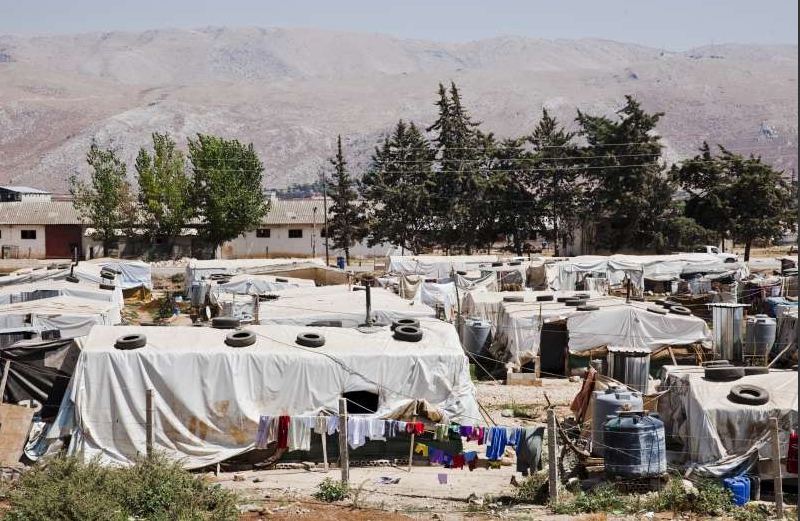
Lebanon is now the largest Syrian refugee-hosting country in the region, with almost 840,000 Syrians either registered as refugees or awaiting registration, according to UNHCR. Unlike other countries neighboring Syria, there are no established refugee camps. Instead people are living in the community in nearly 1,600 different areas.
Before the storm hit last week, UNHCR undertook a research project, conducted over four months, on what life is like for Syrian children in the two countries hosting the highest number of Syrian refugees -- Jordan and Lebanon.
The Future of Syria: Refugee Children in Crisis found that Syrian refugee children face a startling degree of isolation and insecurity. If they aren’t working as breadwinners -- often doing menial labor on farms or in shops -- they are confined to their homes.
Perhaps the statistic we should pay the most attention to, says UNHCR, is: 29 percent of children interviewed said they leave their home once a week or less. Home is often a crammed apartment, a makeshift shelter or a tent.
Too many have been wounded physically, psychologically or both. Some children have been drawn into the war -- their innocence ruthlessly exploited.
A grave consequence of the conflict is that a generation is growing up without a formal education. More than half of all school-aged Syrian children in Jordan and Lebanon are not in school. In Lebanon, it is estimated that some 200,000 school-aged Syrian refugee children could remain out of school at the end of the year.
The Arsal makeshift Syrian refugee camp in northeast Lebanon
Another disturbing symptom of the crisis is the vast number of babies born in exile who do not have birth certificates.
A recent UNHCR survey on birth registration in Lebanon revealed that 77 percent of 781 refugee infants sampled did not have an official birth certificate. Between January and mid-October 2013, only 68 certificates were issued to babies born in Jordan’s Zaatari refugee camp.
How is this allowed to happen? (via yallasouriya.wordpress.com)
Much more needs to be done if a catastrophe is to be averted, says UNHCR, including:
Keep the borders open: For all the problems identified in the report, children have access to protection because countries like Lebanon and Jordan have welcomed them. No effort should be spared in supporting Syria’s neighbors to keep their borders open. Further afield, in the past few months, many adults and children have lost their lives attempting to reach Europe. States must do more to ensure the safety of people attempting to cross water and land borders.
Help the neighbors: The unwavering commitment of neighboring countries to tackle the monumental task of supporting hundreds of thousands of Syrian refugee children must be matched by international solidarity. Overstrained school systems must be built up, health services expanded and local communities reassured that support is available for them too.
Stop recruitment and exploitation of children: Children should never be drawn into conflict. All parties should make every effort to end this practice.
Expand resettlement and humanitarian admissions programs for Syria’s children: Countries beyond Syria’s borders should also offer a home to Syrian refugees. These programs are important lifelines for the most vulnerable, including people who continue to be in danger and families with seriously wounded children. Unaccompanied and separated children are only considered for these programs after a careful examination of their best interests.
Provide alternatives so children do not have to work: We urge individuals and businesses to help fund UNHCR’s financial assistance scheme that targets vulnerable refugee families and call on governments to explore alternative livelihoods opportunities for Syrian refugees.
Prevent statelessness: Lack of a birth certificate or related documentation can increase the risk of statelessness and expose children to trafficking and exploitation. Returning home may be impossible for children without the necessary documentation. Progress is already being made in neighboring countries, but it is vital that host countries continue to improve access to birth registration.
A few of the 1.1 million Syrian refugee children trying to keep warm
Of the 1.1 million Syrian children registered as refugees with UNHCR worldwide, some 75 percent are under the age of 12. Children represent 52 percent of the total Syrian refugee population, which now exceeds 2.2 million. The majority live in Syria’s neighboring countries, with Jordan and Lebanon combined hosting more than 60 percent of all Syrian refugee children. As of 31 October 2013, 291,238 Syrian refugee children were living in Jordan and 385,007 in Lebanon.
The war in Syria has torn families apart, with over 3,700 children in Jordan and Lebanon living without one or both of their parents, or with no adult caregivers at all. By the end of September 2013, UNHCR had registered 2,440 unaccompanied or separated children in Lebanon and 1,320 in Jordan. In some cases the parents have died, been detained, or sent their children into exile alone out of fear for their safety.
UN agencies and partners help to find safe living arrangements for unaccompanied and separated children, reuniting them with their families or finding another family to look after them. Despite living in already crowded conditions, Syrian refugee families continue to open up their homes to relatives or even strangers.
The unrelenting exodus of Syrian refugees to Jordan and Lebanon is having a dramatic impact on these small countries. Lebanon, with a population of a little more than 4 million, has received more than 800,000 Syrian refugees in two years. The economy, essential services and stability of the country are all suffering.
Jordan, one of the most “water poor” nations in the world, with a population of a little over 6 million, is now home to more than 550,000 Syrian refugees. It is also buckling under the pressure on its services, infrastructure and resources.
While many Jordanians and Lebanese display kindness and generosity towards Syrian refugees, tensions between the communities -- and even within refugee communities -- have put refugee children at risk.
Has the world changed so much since the 1980s? Have we become immune to suffering, even that of children?
Maybe Santa doesn't exist after all…

Wednesday, October 9, 2013

Syria’s children: A dying shame

Photo via @Fsa_Media_Hub
The shock, the horror, the shame, the heartbreak… I was left speechless by the above photo of a child in Syria.

Is such human tragedy possible in the 21st century?

The international community’s claim that the task of stopping Syria’s murderous regime is difficult cannot be reason enough to turn a blind eye to the Syrian people’s suffering.

How do American, European, Russian and Chinese politicians have the chutzpah to look their own children in the eye?

I had read a report by Save the Children warning the lack of access to food, soaring prices and a collapse in food production has left the children of Syria at risk of malnutrition.

But a picture is worth a million words and reports!

Save the Children gathered testimonies from refugees in Syria’s neighboring countries, as well as residents trapped by fighting and enduring siege-like conditions, who described families' desperate struggle to feed their children.

The report, Hunger in a War Zone, details how over four million Syrians -- more than two million of them children -- are unable to produce or buy enough food, with many thousands living under fire with little or no access to foodstuffs needed to survive.

Save the Children is already seeing reports that one in 20 children in rural Damascus is severely malnourished.

It heard refugee accounts of children forced to subsist off nothing more than lentils or bread for days on end, with one family trapped in their basement by explosions eating just half a loaf of bread each over the course of four days.

In a briefing on the state of hunger in Syria, released in Washington on September 23, Save the Children also details how severe food shortages are being compounded by an explosion in food prices.

The price of even the most basic food items has spiraled out of control with the cost of the most basic supplies rising by 100 percent.

The war has shattered Syria's economy. The United Nations now estimates close to seven million Syrians have been plunged into poverty since fighting began in March 2011.

In addition, Syria's agriculture and infrastructure are collapsing, with grain production falling to less than half the pre-war levels.

"The world has stood and watched as the children of Syria have been shot, shelled and traumatized by the horror of war. The conflict has already left thousands of children dead, and is now threatening their means of staying alive," said Roger Hearn, Save the Children's regional director for the Middle East.

Syria's children: "A stain on all our consciences" (Photo @Fsa_Media_Hub)
"That some children are going to bed trapped amid fighting -- terrified, alone, vulnerable -- and with empty stomachs ought to be a stain on all our consciences.

"We understand there is a political debate over what to do next in Syria, but we believe everyone can agree on the critical need for safe humanitarian access across the entire country. There is no room for delay or argument: Syria's children must not be allowed to go hungry."

A lack of security makes gathering data on child malnutrition rates extremely difficult throughout Syria.

However, all available evidence -- including spiraling food outlays, a collapse of infrastructure and food production, and testimonies of individuals' experiences with hunger -- suggests Syria's children are facing a mounting struggle to survive.

What will we do about this? More importantly, what will the powers that be do about this?

Addressing the question of what needs to be done, Save the Children is calling for:
  • The UN Security Council to unite around measures to secure full, safe, and unimpeded access to all areas of Syria by the most effective routes
  • International donors to increase support for humanitarian operations throughout all of Syria by any possible channel, as well as scaling up support for refugees and host communities in neighboring countries
  • The UN Secretary General to find ways to increase UN support for a humanitarian response that covers the whole of Syria, including those areas where the UN itself is not based
  • Syria’s neighbors to keep borders open and to work with the UN and humanitarian agencies to ensure a reliable humanitarian supply chain for operations in Syria, including facilitating aid across borders where delivering aid through other routes is not possible or effective
  • All parties to the conflict to allow and facilitate the effective and safe passage of aid to all populations in need, including easing bureaucratic constraints and agreeing on priority humanitarian routes across conflict lines or borders if needed.

Friday, August 23, 2013

Shame, as we fail the children of Syria

A Syrian child refugee, one of one million (Photo via UNHCR)
“Does the world care?"

“Can we forget?”

“Can we forgive you for ignoring us?”

Questions this little girl -- one of one million Syrian refugee children -- seems to be asking us.

Since the beginning of the war in Syria in March 2011, one of the most devastating facts -- after the loss of life -- is the figures for the living.

UNHCR, the UN Refugee Agency, estimates there are now more than one million Syrian children living outside their country as refugees out of almost two million people who have fled Syria to escape the bloody war.

In a statement released today in Geneva, UNHCR says one million Syrian children have now been registered as refugees.

"What is at stake is nothing less than the survival and well-being of a generation of innocents," António Guterres, UNHCR High Commissioner said.

"The youth of Syria are losing their homes, their family members and their futures. Even after they have crossed a border to safety, they are traumatized, depressed and in need of a reason for hope,” he added.

According to UNHCR and UNICEF, “Children make up half of all refugees from the Syria conflict. Most have arrived in Lebanon, Jordan, Turkey, Iraq and Egypt. Increasingly, Syrians are fleeing to North Africa and Europe. Latest figures show that of the one million Syrian refugees under the age of 18, some 740,000 are children under the age of 11.”


"This one millionth child refugee is not just another number," UNICEF Executive Director Anthony Lake said in New York. "This is a real child ripped from home, maybe even from a family, facing horrors we can only begin to comprehend."

"We must all share the shame," said Lake, "because while we work to alleviate the suffering of those affected by this crisis, the global community has failed in its responsibility to this child. We should stop and ask ourselves how, in all conscience, we can continue to fail the children of Syria."

Inside Syria, according to the Office of the High Commissioner for Human Rights, some 7,000 children have been killed during the conflict. UNHCR and UNICEF estimate that more than two million children have been internally displaced within Syria.

The UNHCR statement says, “The physical upheaval, fear, stress and trauma experienced by so many children account for just part of the human crisis.”

Dalhamiyeh camp for Syrian refugees in Lebanon's Bekaa Valley (UNHCR/S. Baldwin)
It adds that both UNHCR and UNICEF highlight the threats to refugee children from child labor, early marriage and the potential for sexual exploitation and trafficking. More than 3,500 children in Jordan, Lebanon and Iraq have crossed Syria's borders either unaccompanied or separated from their families.

UNHCR has registered all one million children, giving them an identity. The agency helps babies born in exile get birth certificates, preventing them from becoming stateless. UNHCR also ensures that all refugee families and children live in some form of safe shelter.

But more remains to be done, said the two agencies. The Syria Regional Refugee Response plan, which calls for $3 billion to address the acute needs of refugees until December 2013, is currently only 38 percent funded.

More than $5 billion has been called for to address the Syria crisis, with critical needs in education, health care and other services for children and child members of host communities. More resources need to be devoted to developing strong networks to identify refugee children at risk and to provide them, and their host communities, with support.

More funds are only part of the response needed to address children's needs, the UN agencies said.

Those who fail to meet these obligations under international humanitarian law should be held fully accountable for their actions, UNHCR and UNICEF said.