Pages

Showing posts with label UNICEF. Show all posts

Sunday, September 6, 2015

Hopes of a generation and region at stake

As war stops 13m children going to school in Middle East, North Africa


What hope is there for the Middle East and North Africa, where violence continues unabated and 13 million children, the next generation, are out of school? Who will be the future leaders, doctors, nurses, engineers, writers, scientists, poets, teachers, artists...?

Surging conflict and political upheaval across the Middle East and North Africa are preventing more than 13 million children from going to school, according to a UNICEF report released at the beginning of September. 

The report, “Education Under Fire” focuses on the impact of violence on schoolchildren and education systems in nine countries -- Syria, Iraq, Lebanon, Jordan, Turkey, Yemen, Libya, Sudan and the State of Palestine -- that have been directly or indirectly impacted by violence.

As the violence gripping Syria, Yemen, Iraq and Libya continues to deepen, and with no end in sight to other, more enduring conflicts in Palestine and Sudan, there is every reason to fear that the huge number of children already out of school across the region will continue to grow.

With more than 13 million children already driven from classrooms because of conflict, it is no exaggeration to say that the educational prospects of a generation of children are in the balance.

The forces that are crushing individual lives and futures are also destroying the prospects for an entire region. Young minds distorted by hatred and fear will need extraordinary support to contribute fully to the development of societies built on social progress, tolerance and prosperity, the report says.

Across the region, children demand -- above all else -- to go back to school. They dream of a better future for themselves and their families, and of the day when they can help rebuild their shattered communities and nations. These are the future teachers, nurses, doctors, architects, musicians, scientists and technicians of countries like Syria, Iraq, the State of Palestine, Sudan, Libya and Yemen, and their future leaders too.

Like children anywhere, they want an opportunity to learn, and acquire the skills they need to fulfill their potential. This constitutes a clear challenge to the international community, host governments, policy makers, and all those who want to see the Middle East and North Africa emerge from its current turmoil.

Attacks on schools and education infrastructure -- sometimes deliberate -- are one key reason why many children do not attend classes, the report writes. In Syria, Iraq, Yemen and Libya alone, nearly 9,000 schools are out of use because they have been damaged, destroyed, are being used to shelter displaced civilians or have been taken over by parties to the conflict.


Other factors include the fear that drives thousands of teachers to abandon their posts, or keeps parents from sending their children to school because of what might happen to them along the way – or at school itself.

In Jordan, Lebanon and Turkey, more than 700,000 Syrian refugee children are unable to attend school because the overburdened national education infrastructure cannot cope with the extra student load.

“The destructive impact of conflict is being felt by children right across the region,” says Peter Salama, Regional Director for UNICEF in the Middle East and North Africa. “It’s not just the physical damage being done to schools, but the despair felt by a generation of schoolchildren who see their hopes and futures shattered.”

"It's no coincidence in that what we see in terms of our TV pictures, the tragic pictures of people crossing on boats to Greece and Italy, very much comes back to the Syrian conflict and (to) the Iraqi conflict to a lesser extent," Salama says.

Countries hosting refugees are struggling to get children into schools because their education systems were never created to absorb such numbers. "Everyone is basically straining at the seams in terms of dealing with this massive crisis, which is not surprising given that it is the biggest population movement since World War Two," he notes.

Children out of school can end up working illegally, often being breadwinners for their family. They are vulnerable to exploitation and can be more easily recruited into armed groups, Salama adds.

UNICEF's research shows children are increasingly becoming combatants from a younger age, he added, while students and teachers have been killed, kidnapped and arrested.

"We're on the verge of losing an entire generation of children in the Middle East and North Africa. We must step up, otherwise it will be irreversible and long-term damage we've collectively inflicted upon the children of this region."

The report highlights a range of initiatives -- including the use of self-learning and expanded learning spaces -- that help children learn even in the most desperate of circumstances. But it says the funding such work receives is not commensurate with the burgeoning needs, despite the fact that children and parents caught up in conflict overwhelmingly identify education as their number one priority.

 In particular, the No Lost Generation Initiative, launched by UNICEF and other partners in 2013 to galvanize more international backing for the education and protection needs of children affected by the Syria crisis deserves more support, the report says.

In addition, the reports calls on the international community, host governments, policy makers, the private sector and other partners to: 
  • Reduce the number of children out of school through the expansion of informal education services especially for vulnerable children.
  • Provide more support to national education systems in conflict-hit countries and host communities to expand learning spaces, recruit and train teachers and provide learning materials
  • In countries affected by the Syria crisis, advocate for the recognition and certification of non-formal Education services.
  • Prioritize Funding for Education in conflict-hit countries. Funding and investment in education during emergencies remains low. In 2013, less than 2% of emergency aid globally went to education and learning opportunities. UNICEF is seeking around $300 million to fund its emergency education work in the region in 2015.
The full report can be read here.

Friday, May 1, 2015

Roger Waters to Robbie Williams: Don’t play in Tel Aviv

One UK superstar to another: If you take children and human rights seriously, please don't play Israel

Waters and Williams (Photo Credit: AP/Evan Agostini/Gero Breloer)
In a letter last week, Roger Waters explains to Robbie Williams why his decision to play in Tel Aviv tomorrow, May 2, “gives succor to [Israeli Prime Minister Binyamin] Netanyahu and his regime and endorses their deadly racist policies.”

The following is Waters’ letter published in Salon on April 28:

* * * *

Roger Waters to Robbie Williams: “Your decision to play in Tel Aviv gives succor to Netanyahu and his regime, and endorses their deadly racist policies”


Robbie Williams:

One of the most horrifying incidents during Israel’s massive assault on Gaza last summer was the killing of four Palestinian boys playing soccer on a beach.  This war crime was meticulously documented by human rights organizations and by journalists on the scene at the Al-Deira Hotel. NBC correspondent Ayman Mohyeldin tweeted that just minutes prior he had joined the children in their soccer game.  War-hardened journalists tweeted their eyewitness distress.

Gaza beach last summer (Photo by Tyler Hicks, The New York Times)
I bring up this gruesome scene because popular UK entertainer Robbie Williams, soon to play a May 2 concert in Tel Aviv, is known to be a huge soccer fan.  He is also UNICEF’s UK ambassador and a declared supporter of its Children in Danger campaign. Yet, sadly, when it comes to Palestinian children, like those killed on that beach in Gaza that day, Williams is showing a chilling indifference to their well-being.

London Palestine Action has pointed to his hypocrisy in that he purports to represent UNICEF while preparing to play a gig in Tel Aviv: “We hope UNICEF will remain steadfast in defense of children’s rights, including Palestinian children, and ask Robb

UNICEF, as declared in its mission statement, insists that “the survival, protection and development of children are universal development imperatives that are integral to human progress.”

Dear Robbie, playing this concert on May 2 would be giving your tacit support to the deaths of over 500 Palestinian children last summer in Gaza, including the four soccer players on the beach in Gaza, and condoning the arrest and abuse of hundreds of Palestinian children each year living under Israeli occupation, as has been documented by UNICEF itself.

To declare my own history, I confess I myself played a gig in Israel in 2006 before I knew any better. At that time and afterward, moved as I was, I listened to voices from all sides and made it my business to learn as much as I could about the situation in Israel and Palestine. I traveled widely in Israel and the West Bank and now nine years later having done my research, I have come to the conclusion that BDS (Boycott, Divestment, and Sanctions) is the most viable, peaceful way to end the suffering of, and forge a better future for, all the people of the Holy Land. I encourage you, Robbie, and all other artists, not to play in Israel until Israel complies with international law and recognizes the basic human rights of all the people of the region, including the Palestinian people, which, Robbie, includes Palestinian children playing soccer.

Since my 2006 gig, the Boycott, Divestment, and Sanctions movement has emerged as a dynamic force to be reckoned with. Covered heavily in mainstream media around the world, BDS has succeeded in publicizing the Palestinian people’s predicament, their lack of freedom, equality and access to justice.


Now, in 2015, there is really no excuse for musicians agreeing to play in Tel Aviv. The jury of world opinion is in; global civil society supports equal rights for all. We are approaching the same tipping point as when artists lent their support to the anti-apartheid movement in South Africa.

Those innocent soccer-playing children in Gaza were the victims of a violent indiscriminate Israeli attack.

That was more than nine months ago.  Since then, one of those kids, 12-year-old Montasser Abu Bakr, who was playing alongside his brother, and three friends, has attempted suicide and is regularly subject to uncontrollable fits of screaming and sobbing. This is one of the children whose “survival, protection and development” you, Robbie, have promised to uphold. Tragically, it is too late for Montasser’s dead brother and the other three children needlessly slain that day. But, Robbie, you can still stand up and send a powerful message as an individual and as a genuine human rights ambassador, that “business as usual” with Israel is unacceptable until such time as our Palestinian brothers and sisters are afforded equal human rights under international law and their children are not subject to this kind of obscene random slaughter.

As a UNICEF ambassador and a man of humanity and honor, you have, in my opinion, a duty to respect the picket line created by Palestinian civil society and a growing number of engaged musicians, artists and academics around the globe.  Not just Ken Loach and Stephen Hawking and Elvis Costello and Brian Eno and me, but all the other artists, thousands and counting, standing up for the oppressed and the occupied, those subjugated people that Israeli officials describe as needing to be made to “lose weight, but not to starve to death” or, worse, as grass to be mowed.

To be clear, Robbie, whether intended or not, your decision to play in Tel Aviv gives succor to Netanyahu and his regime, and endorses their exceptionalist and deadly racist policies.

So, I say, please, Robbie, look inside yourself and find the soccer fan, the man, the father who can feel another father’s loss.

If you cannot see yourself in the eyes of a Palestinian father, you should do the decent thing and resign from UNICEF, or failing that, UNICEF should let you go.

Love.
Roger Waters.

PS: To all of you reading this who care about children, thank you, we are bound together by the love we have for children, not just Montasser Abu Bakr, his brother and his friends, but the other children in Gaza and the West Bank and Israel and all the other children all over the world who should have the right to live and play in peace and safety. Our love and goodwill extends to each of them equally as we strive to encourage the creation of a Holy Land worthy of that name.

Sunday, June 29, 2014

Muslim Council of Britain denounces FGM


Ahead of "Cutting Season" and Girl Summit 2014, the Muslim Council of Britain (MCB) last week endorsed a landmark declaration making Female Genital Mutilation (FGM) unlawful and clarifying it is not supported by religious doctrine.

The UK’s most prominent Muslim organization on June 20 denounced FGM as contrary to Islam, adding that the traditional practice severely violates the human rights of women and girls.

The first Girl Summit, to be hosted by the UK and UNICEF on July 22, aims to mobilize domestic and international efforts to end FGM and child early and forced marriage (CEFM) within a generation.

Girls and women have the right to live free from violence and discrimination and achieve their potential, but some are being prevented from doing so by harmful practices such as FGM and CEFM, which are illegal in the UK, says a statement on the UK government site.

The summit wants to secure new commitments from the private sector, faith leaders, other civil society organizations and governments.


Child, early and forced marriage occurs in every part of the world, affecting millions of girls every year. One in three girls in developing countries is married by the age of 18, and one in nine by the age of 15. Some are as young as eight.

Girls who marry young have babies while still children, putting them at risk of death or suffering for the rest of their lives. They are more likely to be poor and stay poor. In the UK, hundreds of girls risk being forced into marriage, violating their human rights. Forced marriage victims can suffer physical, psychological, emotional, financial and sexual abuse.

FGM removes a girl’s right to have control over her own body. Traditionally considered essential for marriage and inclusion in the community, it is an extreme and violent way in which girls and women are controlled and disempowered. It can result in a lifetime of pain, psychological problems and difficulty in childbirth. Current trends suggest at least 30 million girls will be at risk over the next decade -- with more than 20,000 at risk in the United Kingdom every year, the UK government website adds.

MCB declaration

The religious and community leaders that signed the historic declaration condemning FGM noted, however, there are still barriers to ending the practice in the UK.

The MCB is one of the UK’s largest and most diverse Muslim umbrella organizations with over 500 affiliated national, regional and local organizations, mosques, charities and schools.

The Church of England and the Muslim Women’s Network UK were two of 160 groups who supported the announcement denouncing FGM as a form of violence against women and a denial of women’s human rights not supported by religious doctrine. The groups will sign a joint declaration condemning FGM -- currently a criminal offense in the UK -- during the Girl Summit.

The MCB will launch a campaign by distributing leaflets in mosques and community centers in Britain to support ending the barbaric practice.


It said it was “not true” mutilation was a Muslim requirement noting that one of the “basic principles” of Islam was not to harm oneself or others.

The MCB said FGM was bringing Islam “into disrepute” and could cause severe pain, bleeding, problems in pregnancy and even death, as well leaving some victims with lasting psychological problems.

The new leaflet states: “FGM is not an Islamic requirement. There is no reference to it in the Holy Quran that states girls must be circumcised. Nor is there any authentic reference to this in the Sunnah, the sayings or traditions of our Prophet. FGM is bringing the religion of Islam into disrepute.”

The document also warns there is “an increasingly high risk of being prosecuted” for carrying out mutilation, which has been illegal in the UK since 1985, and that perpetrators face up to 14 years in prison.

The MCB announcement follows a Home Office summit on June 19 at which other religious organizations, including the Shia al-Khoei Foundation and the Muslim Women’s Network UK, announced their support for a government declaration against FGM to be published at the Girl Summit.

Harmful practice

Three million girls and women are subjected to FGM worldwide each year. That's 8000 girls per day.

FGM is a harmful practice that is recognized worldwide as a human rights violation. The practice of FGM violates:
  • Right to physical and mental integrity
  • Right to highest attainable standard of health
  • Right to be free from all forms of discrimination against women (including violence against women)
  • Right to freedom from torture or cruel, inhuman or degrading treatment
  • Rights of the child, and
  • In extreme cases, right to life
The European Parliament estimates 500,000 girls and women living in Europe are suffering with the lifelong consequences of FGM. It still affects up to 140 million women and girls worldwide, with an estimated 20,000 girls at risk in the UK.

Increasingly as migration becomes more common, diaspora communities arriving to Western nations continue the practice. FGM prevalence is therefore rising among migrant residents of Norway, Australia, Canada, Sweden, Switzerland, Britain and the United States. Migrant families, often traveling with their young daughters in summer vacations to their native countries, have the procedure performed at grave risk of infection bleeding and death when non-clinicians perform this procedure. School holidays become “The Cutting Season.”

FGM tradition

Also known as female circumcision or simply as “cutting,” FGM/C involves removing all or part of the clitoris, the surrounding labia (the outer part of the vagina) and sometimes the sewing up of the vagina, leaving only a small opening for urine and menstrual blood.

There are no medical benefits to this tradition. It is carried out for cultural reasons, often because it demonstrates a girl's virginity on her wedding night.

It seems the practice predates Christianity and Islam. There is mention made of Egyptian mummies that display characteristics of FGM/C. The historian Herodotus claims that in the fifth century BC the Phoenicians, Hittites and Ethiopians practiced circumcision. It is also reported circumcision rites were practiced in tropical zones of Africa, in the Philippines, by certain tribes in the Upper Amazon, and in Australia by women of the Arunta tribe. It also occurred among the early Romans and Arabs.

Many different peoples and societies have followed the FGM/C practice. It cuts across ages, continents, religions and is performed by Muslims, Christians, Ethiopian Jews and Copts among others.

The World Health Organization (WHO) estimates between 100 and 140 million girls and women worldwide have been subjected to one of three types of female genital mutilation. Estimates based on the most recent prevalence data indicate that 91.5 million girls and women above the age of nine in Africa are currently living with the consequences of FGM. There are an estimated three million girls in Africa at risk of undergoing FGM every year.

WHO has identified four types of FGM/C:

Type 1: Excision of the prepuce, with or without excision of part or the entire clitoris.

Type 2: Excision of the clitoris with partial or total excision of the labia minora.

Type 3: Excision of part or all of the external genitalia and stitching/narrowing of the vaginal opening (infibulation) -- sometimes referred to as pharaonic circumcision.

Type 4: Others, such as pricking, piercing or incising, stretching, burning of the clitoris, scraping of tissue surrounding the vaginal orifice, cutting of the vagina, introduction of corrosive substances or herbs into the vagina to cause bleeding or to tighten the opening.

The removal of, or damage to, healthy, normal genital tissue interferes with the natural functioning of the body and causes several immediate and long-term health consequences. For example, babies born to women who have undergone female genital mutilation suffer a higher rate of neonatal death; end in stillbirth or spontaneous abortion; and in a further 25%, the newborn has a low birth weight or serious infection, both of which are associated with an increased risk of perinatal death.

WHO says FGM/C is nearly always carried out on minors and is therefore a violation of the rights of the child. It also violates the rights to health, security and physical integrity of the person, the right to be free from torture and cruel, inhuman or degrading treatment, and the right to life when the procedure results in death.

In Egypt, 94% of women arrange for their daughters to undergo this “medicalized” form of FGM/C, 76% in Yemen, 65% in Mauritania, 48% in Côte d’Ivoire, and 46% in Kenya. This approach may reduce some of the immediate consequences of the procedure -- such as pain and bleeding -- but, WHO and UNICEF point out, it also tends to obscure its human rights aspect and could hinder the development of long-term solutions for ending the practice.

How many more generations will it take to eradicate FGM/C? Is the magic word “education”? Is FGM/C a practice too deep-rooted to overcome? Maybe only time will tell…

In the meantime, you can take a stand with me against FGM/C and child and forced marriage by signing the pledge  to show your support in ending these harmful practices forever. Our voices will be heard at the Girl Summit.

Related articles and references:


Friday, August 23, 2013

Shame, as we fail the children of Syria

A Syrian child refugee, one of one million (Photo via UNHCR)
“Does the world care?"

“Can we forget?”

“Can we forgive you for ignoring us?”

Questions this little girl -- one of one million Syrian refugee children -- seems to be asking us.

Since the beginning of the war in Syria in March 2011, one of the most devastating facts -- after the loss of life -- is the figures for the living.

UNHCR, the UN Refugee Agency, estimates there are now more than one million Syrian children living outside their country as refugees out of almost two million people who have fled Syria to escape the bloody war.

In a statement released today in Geneva, UNHCR says one million Syrian children have now been registered as refugees.

"What is at stake is nothing less than the survival and well-being of a generation of innocents," António Guterres, UNHCR High Commissioner said.

"The youth of Syria are losing their homes, their family members and their futures. Even after they have crossed a border to safety, they are traumatized, depressed and in need of a reason for hope,” he added.

According to UNHCR and UNICEF, “Children make up half of all refugees from the Syria conflict. Most have arrived in Lebanon, Jordan, Turkey, Iraq and Egypt. Increasingly, Syrians are fleeing to North Africa and Europe. Latest figures show that of the one million Syrian refugees under the age of 18, some 740,000 are children under the age of 11.”


"This one millionth child refugee is not just another number," UNICEF Executive Director Anthony Lake said in New York. "This is a real child ripped from home, maybe even from a family, facing horrors we can only begin to comprehend."

"We must all share the shame," said Lake, "because while we work to alleviate the suffering of those affected by this crisis, the global community has failed in its responsibility to this child. We should stop and ask ourselves how, in all conscience, we can continue to fail the children of Syria."

Inside Syria, according to the Office of the High Commissioner for Human Rights, some 7,000 children have been killed during the conflict. UNHCR and UNICEF estimate that more than two million children have been internally displaced within Syria.

The UNHCR statement says, “The physical upheaval, fear, stress and trauma experienced by so many children account for just part of the human crisis.”

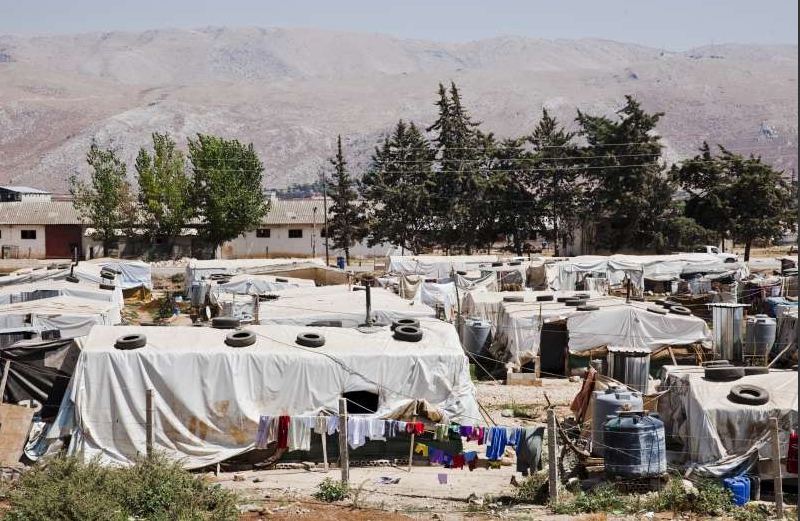
Dalhamiyeh camp for Syrian refugees in Lebanon's Bekaa Valley (UNHCR/S. Baldwin)
It adds that both UNHCR and UNICEF highlight the threats to refugee children from child labor, early marriage and the potential for sexual exploitation and trafficking. More than 3,500 children in Jordan, Lebanon and Iraq have crossed Syria's borders either unaccompanied or separated from their families.

UNHCR has registered all one million children, giving them an identity. The agency helps babies born in exile get birth certificates, preventing them from becoming stateless. UNHCR also ensures that all refugee families and children live in some form of safe shelter.

But more remains to be done, said the two agencies. The Syria Regional Refugee Response plan, which calls for $3 billion to address the acute needs of refugees until December 2013, is currently only 38 percent funded.

More than $5 billion has been called for to address the Syria crisis, with critical needs in education, health care and other services for children and child members of host communities. More resources need to be devoted to developing strong networks to identify refugee children at risk and to provide them, and their host communities, with support.

More funds are only part of the response needed to address children's needs, the UN agencies said.

Those who fail to meet these obligations under international humanitarian law should be held fully accountable for their actions, UNHCR and UNICEF said.

Monday, June 11, 2012

How many more Child Brides must die?


A Saudi Child Bride
A child is a child, is a child! Children should be loved, cherished, protected and educated.
Yet, last month, another Child Bride in Yemen bled to death on her wedding night. The 13-year-old’s uterus was torn during intercourse with her 30-year-old husband.
Local rights group Save the Children said the tragedy underscored the need for the state to issue a legal age limit for marriage and to begin a national awareness campaign. The husband rejected all liability, blaming the tragedy on his late wife's "poor health and refusal to be considerate to his needs."
Save the Children activists warned against Yemen's new trend of marrying off daughters too early, saying "abject poverty and a lack of education" were to blame.
Support Yemen, a non-profit independent campaign to establish a democratic civic state in Yemen where “the constitution gives people freedom, equality and social justice to every citizen,” is also fighting to preserve the childhood of little girls.


The group composed of young female and male activists, journalists, videographers, photographers, web designer and bloggers have released a video (above) asking:
“How much innocence of little girls’ childhood must fade away? How many mothers must die due to inadequate healthcare? How much illiteracy must develop before education becomes free and mandatory? How many victims must suffer before a law criminalizing domestic violence is issued? How many revolutions do women need participate in so that they find place in the government and parliament?
“Women's rights are part of human rights... I will fight for my rights and break the silence...”
While there are great efforts to tackle the issue of “child marriage,” it is still a common practice in many countries worldwide.
A recent article in Dubai’s Gulf News notes the UAE is at the forefront in tackling this issue and the minimum age for marriage has been set at 18. Permission to marry at a younger age is needed from a judge who must seek approval from the Ruler’s Court.
The minimum age in the UAE is higher than in Kuwait and Bahrain, which is set at 16. Yemen in 1999 eliminated the age limit altogether. Attempts by MPs to re-instate it in 2009, coupled with protests on the streets and campaigns by Yemeni Nobel Peace Prize winner Tawakkul Karman, have not succeeded.
Application of this policy in the UAE led to a significant decrease in early marriages. Gulf News says the percentage of young women married between 15 and 19 years of age dropped from 57 percent in 1975 to an astonishing eight percent in 1995.
UNICEF map
Child marriage is a worldwide problem but is most prevalent in Africa and Southern Asia. Although its practice has decreased somewhat in recent decades, it remains common in rural and some other areas and among the most poverty stricken, according to the map released by UNICEF.
On “child marriage,” UNICEF says: “The right to free and full consent to a marriage is recognized in the Universal Declaration of Human Rights (1948) with the recognition that consent cannot be ‘free and full’ when one of the parties involved is not sufficiently mature to make an informed decision about a life partner.
The Convention on the Elimination of all Forms of Discrimination Against Women (1979) states that the betrothal and marriage of a child shall have no legal effect and all necessary action, including legislation, shall be taken to specify a minimum age of marriage. The Committee on the Elimination of Discrimination against Women recommends this age to be 18.”
An Afghan Child Bride
Child marriage is a violation of human rights, whether it happens to a girl or a boy, but it represents perhaps the most prevalent form of sexual abuse and exploitation of girls. The harmful consequences include separation from family and friends, lack of freedom to interact with peers and participate in community activities, and reduced education opportunities. Child marriage can also result in bonded labor or enslavement, commercial sexual exploitation and violence against the victims.
Because they cannot abstain from sex or insist on condom use, Child Brides are often exposed to such serious health risks as premature pregnancy, sexually transmitted infections and, increasingly, HIV/AIDS.
UNICEF facts and figures
  1. Globally, 36 per cent of women aged 20-24 were married or in union before they reached 18 years of age. (This figure does not include China. Unless otherwise indicated, figures are from United Nations Children’s Fund, The State of the World’s Children 2006, UNICEF, New York, 2005, p. 131.)
  2. An estimated 14 million adolescents between 15 and 19 give birth each year. Girls in this age group are twice as likely to die during pregnancy or childbirth as women in their twenties. (United Nations Population Fund, State of World Population 2005: The Promise of Equality: Gender Equity, Reproductive Health and the Millennium Development Goals, UNFPA, New York, 2005, p. 50.)
  3. Marriage of young girls is most common in sub-Saharan Africa and South Asia. In Niger, 77 percent of 20- to 24-year-old women were married before the age of 18. In Bangladesh, this rate was 65 percent.
Child Brides in Yemen
UNICEF says the role of government and civil-society institutions is to develop and implement systems to prevent or discourage this practice. Because child marriage is closely associated with poverty, government commitment to poverty reduction is likely to lead to a decrease in child marriages.
Governments also need to establish 18 as the legal age of marriage for girls, as well as boys, and ensure the rule is upheld. Addressing attitudes and customs that promote or condone the practice is vital to changing the acceptable age for marriage.
Education
As always, education is the magic world. Expanding children’s knowledge and empowerment is crucial, particularly for girls. Educated girls are less likely to agree to marry at a young age. Attempts to close gender gaps in education can include the establishment of child-friendly schools, cash incentives for parents and the expansion of non-formal education.
One way UNICEF is addressing the issue of child marriage is through the promotion of girls’ education. Research shows that higher levels of education for girls prevent child marriage. (United Nations Children’s Fund, Early Marriage: A harmful traditional practice: A statistical exploration, UNICEF, New York, 2005, pp. 12-13.) UNICEF is the lead agency for the UN Girls’ Education Initiative, which works to ensure that by 2015, all children everywhere will be able to complete primary schooling.
Consequences
FORWARD, the Foundation for Women's Health, Research and Development -- an African Diaspora women's campaign and UK-registered support charity established in 1983 -- says there are numerous detrimental consequences associated with child marriage, with physical, developmental, psychological and social implications.

FORWARD notes Child Brides are likely to become pregnant at an early age and there is a strong correlation between the age of a mother and maternal mortality. Girls aged 10-14 are five times more likely to die in pregnancy or childbirth than women aged 20-24. Girls aged 15-19 are twice as likely to die. Young mothers face higher risks during pregnancies including complications such as heavy bleeding, fistula, infection, anemia and eclampsia which contribute to higher mortality rates of both mother and child. At a young age a girl has not developed fully and her body may strain under the effort of childbirth, which can result in obstructed labor and obstetric fistula. Obstetric fistula can also be caused by the early sexual relations associated with child marriage, which take place sometimes even before menarche.


There is also a clear link between Female Genital Mutilation (FGM) and child and early marriages. Communities that practice FGM are also more likely to practice child marriages. In some FGM-practicing communities, FGM is carried out at puberty and then marriages are arranged immediately afterwards. It is also common in FGM-practicing communities for a man to refuse to marry a girl or woman who has not undergone FGM, or to demand that FGM is carried out before marriage.
According to a 2008 study by the Gender Development Research and Studies Center in Sanaa, just over half of the girls are married before their 18th birthday -- some as young as eight. Admittedly, the problem is not unique to Yemen. In April 2012, Saudi Arabia’s Grand Mufti Sheikh Abdulaziz al-Sheikh suggested girls can be married by age 10-12.
As with all change, child marriages may take generations and decades to eliminate completely. It is certainly through education, awareness and enlightened government. Each Child Bride death is one too many…